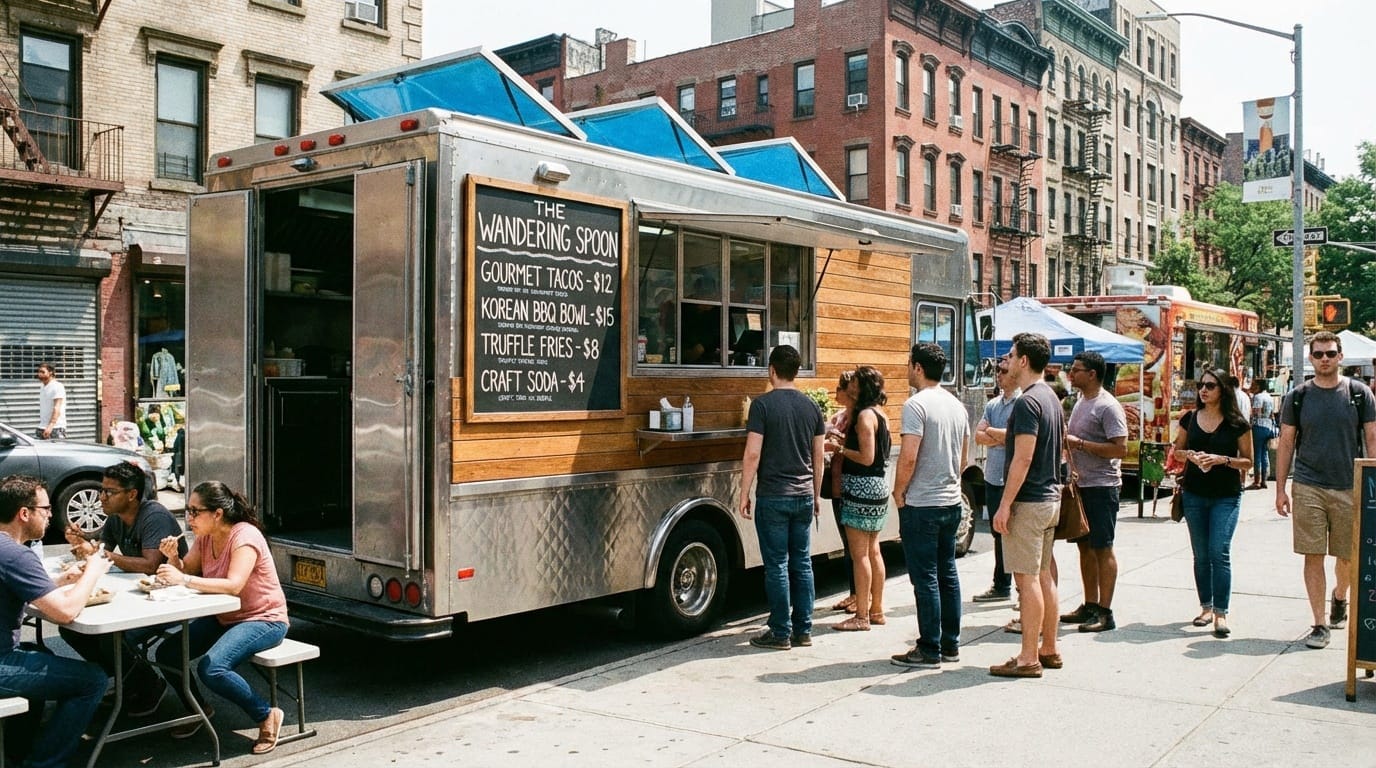
Menu Pricing Strategies for Food Trucks: Value-Based, Cost-Plus, and Competitive
Choosing how to price your food truck menu is a strategic decision. Here are three core strategies—value-based, cost-plus, and competitive—plus tactics that work in the field.
For the psychology of how customers see prices, see our Menu Pricing Guide; for the math of cost and margin, see Menu Costing and Catering Menu Pricing. This article is about strategies: how you decide what number to put on the board.
Three Core Strategies
Value-based
Price based on what customers believe the experience is worth. Strong for unique concepts, events, and premium positioning.
Cost-plus
Add a target margin to food and labor cost. Use our Menu Costing Tool to get costs right, then apply a multiplier (e.g. 3–4x food cost).
Competitive
Align with local trucks and quick-serve. Good for commodity items; differentiate with quality, speed, or service so you’re not only competing on price.
Tactics That Work for Food Trucks
Anchor pricing: Put a higher-priced item (e.g. combo or premium option) next to your standard items so the standard looks reasonable. Bundling: Offer a meal deal (sandwich + side + drink) at a price that feels like a discount but improves margin. Round numbers vs. charm: Some trucks use round numbers ($10, $15); others use just-under ($9.99). Test what fits your brand. Combine strategy with menu engineering so your best margin items get the right placement and promotion.
When to Use Which Strategy
Your concept and market should drive the primary strategy. Value-based fits unique concepts, events, and premium positioning—customers pay for the experience. Cost-plus fits high-volume, commodity-style menus where you need to protect margin and have good cost data. Competitive pricing fits crowded markets where you need to be in the ballpark; differentiate with quality, speed, or service so you're not only competing on price. Many trucks blend: cost-plus as a floor, value-based for specials or events, and competitive as a sanity check.
Step-by-Step: Setting Prices for a New Season
A repeatable process keeps your prices aligned with costs and competition without constant guesswork.
- Calculate food and labor cost per item using our Menu Costing Tool and Menu Costing Guide.
- Choose a primary strategy (value-based, cost-plus, or competitive) based on your concept and market.
- Set target food cost % or contribution margin (e.g. 25–30% food cost for mains, lower for drinks).
- Apply tactics: anchor pricing, bundling, and round vs charm pricing where they fit your brand.
- Compare to local competitors and adjust so you're in the right ballpark without leaving money on the table.
- Review with menu engineering: promote high-margin stars and consider dropping or repricing dogs.
Common Pricing Mistakes
- Underpricing to beat the competition — Erodes margin and trains customers to expect cheap prices. Use cost-plus as a floor and competitive as a check, not a target.
- Not costing add-ons and modifiers — Extra cheese, bacon, or sauce add up. Use the Menu Costing Tool for every modifier so you know true cost and can price add-ons to protect margin.
- Ignoring drinks and sides — Often your best margin. Promote them on the board and train staff to suggest them. See our article on high-margin food items.
- Setting prices once and never revisiting — Ingredient and labor costs change. Review at least quarterly and adjust so margin stays healthy.
Menu Pricing Strategies: FAQ
Related Articles
How to Price Your Catering Menu for Maximum Profit
Build catering prices from complete scope, current costs, service capacity, contract risk, and required contribution.
Read ArticleHigh Margin Food Items for Food Trucks
Which menu items deliver the best margins. Drinks, sides, add-ons and menu engineering.
Read Article5 Common Food Truck Permit Mistakes That Cost Thousands
Avoid these costly permit errors that shut down food trucks and delay launches.
Read ArticleThe Complete Guide to Food Truck Insurance (2026)
Everything you need to know about protecting your mobile food business.
Read Article