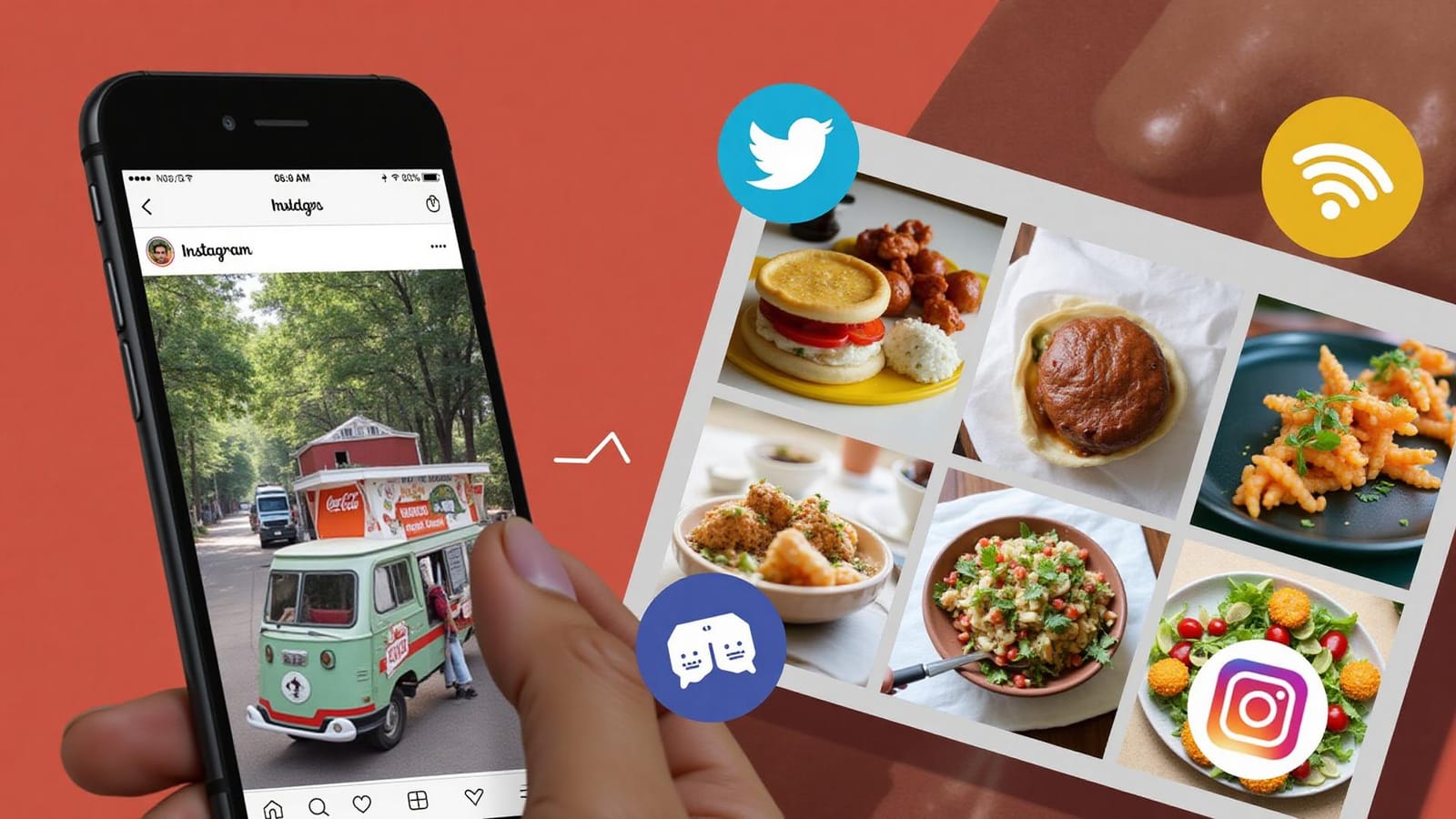
Social Media Marketing for Food Trucks That Actually Works
Use social media to publish reliable location information, answer customer questions, show the service clearly, and create measurable paths to orders and catering inquiries.
The Social Media Advantage
Social activity has a cost in staff time, production, tools, and response work. Define the customer action each post should support, then compare that result with the effort required.
Social media is not only a gallery. It can communicate where the business will be, what is available, how service works, and how a customer can order or inquire. Platform engagement is not the same as a visit, sale, profitable booking, or repeat customer, so track those outcomes separately.
Platform-by-Platform Strategy
Visual content, behind-the-scenes, location updates
Strategy:
Post 1-2x daily, use Stories for real-time updates, leverage Reels for viral content
Content Types:
Top Hashtags:
Community building, events, customer service
Strategy:
Post 3-5x weekly, engage in comments, create events for special occasions
Content Types:
Top Hashtags:
TikTok
Viral content, younger demographics, creative videos
Strategy:
Post 1-3x daily, use trending sounds, create food prep content, engage with comments
Content Types:
Top Hashtags:
Real-time updates, customer service, industry networking
Strategy:
Tweet 5-10x daily, respond quickly to mentions, share industry news
Content Types:
Top Hashtags:
Content Strategies That Drive Sales
Behind-the-Scenes
Show the real work that goes into your food truck operation
Examples:
- Prep work at 5 AM
- Equipment setup
- Ingredient sourcing
- Team meetings
Customer Spotlights
Feature your customers enjoying your food and sharing their experience
Examples:
- Customer testimonials
- First-time visitors
- Regular customers
- Group celebrations
Food Photography
Professional-quality photos of your signature dishes
Examples:
- Plated dishes
- Ingredient close-ups
- Cooking process
- Final presentation
Location Updates
Real-time updates about where you'll be and when
Examples:
- Daily schedule
- Special events
- Weather updates
- Sold out announcements
Educational Content
Share knowledge about your cuisine, ingredients, or cooking techniques
Examples:
- Ingredient sourcing
- Cooking techniques
- Cultural background
- Nutritional info
Measuring Success: Key Metrics
Follower Growth
Track follower count across all platforms
Engagement Rate
Likes, comments, shares divided by followers
Location Check-ins
Customers checking in at your truck location
Direct Messages
Customer inquiries about location, menu, hours
Website Traffic
Social media referrals to your website
Illustrative Measurement Scenarios
Location update workflow
Key Tactics:
Catering lead workflow
Key Tactics:
30-Day Social Media Action Plan
Week 1: Foundation
- • Set up business profiles on all platforms
- • Create consistent branding and bio
- • Research and follow competitors
- • Plan content calendar
- • Take professional food photos
Week 2: Content
- • Start posting daily on Instagram
- • Create first TikTok videos
- • Engage with local food accounts
- • Post location updates
- • Share behind-the-scenes content
Week 3-4: Growth
- • Run first social media contest
- • Collaborate with local influencers
- • Start using trending hashtags
- • Respond to all comments and DMs
- • Analyze metrics and adjust strategy
Build a Measurable Content Workflow
Use a working content calendar, location update process, campaign brief, and review log. Replace vanity targets with the customer and sales actions that matter to your operation.