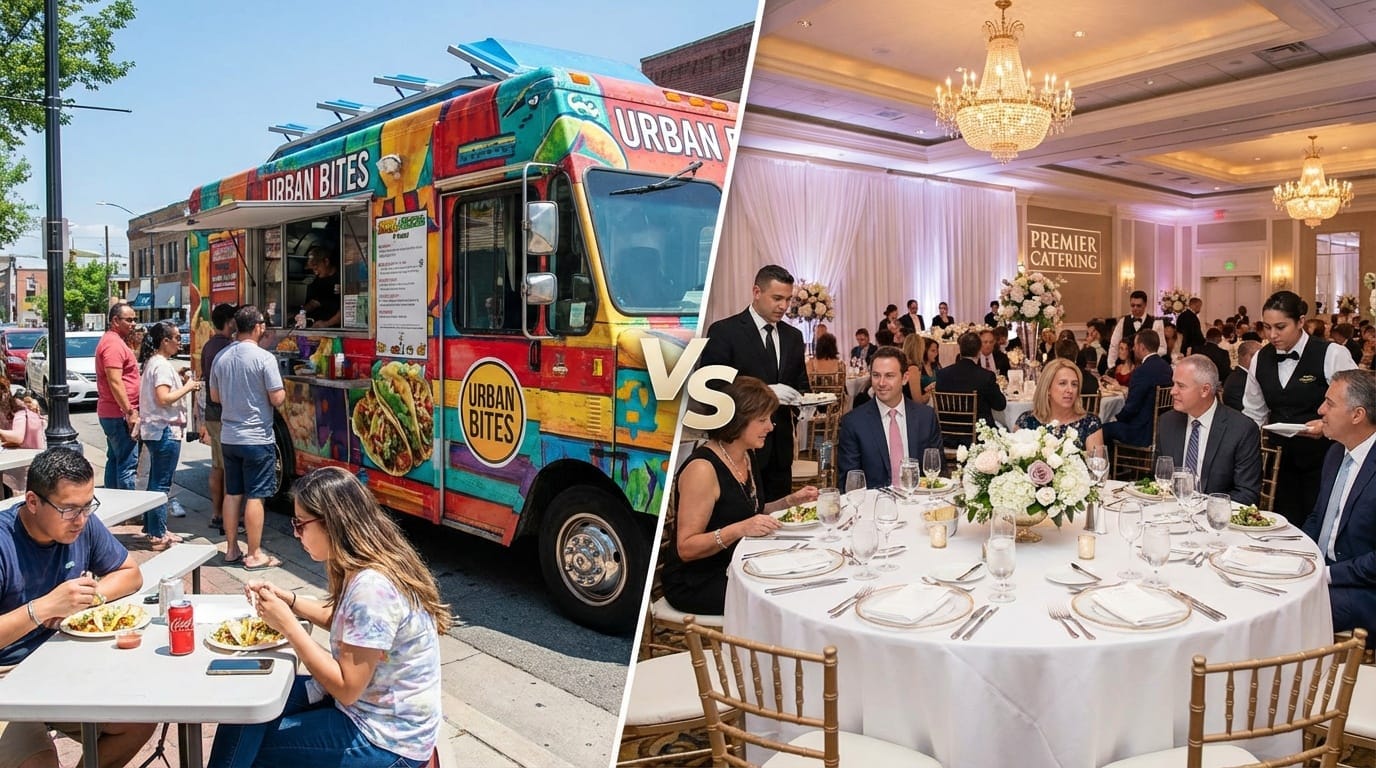
Food Truck vs Catering: Pros, Cons, and Who It’s For
A direct comparison of running a food truck vs a catering business. Costs, flexibility, scalability, and which path fits your goals.
You can do both—many operators start with one and add the other. This guide compares them head-to-head so you can decide where to focus. For full startup steps, see our Food Truck Startup Guide and Catering First 90 Days.
Food Truck: Pros and Cons
A food truck is a mobile kitchen: you prep (often at a commissary), drive to a spot or event, serve customers, and break down. Startup costs are typically $50k–$200k+ for the vehicle, equipment, and permits—see our Food Truck Startup Cost article and Startup Cost Calculator. Revenue is location- and weather-dependent; a strong day might be a festival or a steady lunch spot, while a slow day might mean low foot traffic. Permits and rules vary by city and sometimes by spot, so factor in compliance. The upside: you can test locations, build brand visibility at events, and keep fixed costs lower than a brick-and-mortar restaurant.
Pros
- Mobile—you can test locations and events
- Lower fixed location cost than a restaurant
- Strong for brand visibility at events and street spots
Cons
- Vehicle and equipment upfront cost
- Weather and location-dependent revenue
- Permits and rules vary by city and spot
Catering: Pros and Cons
Catering is event-based: you sell to a client (wedding, corporate, private party), plan the menu and logistics, prep (often in a commissary or rental kitchen), and deliver and serve at the venue. You can start with less capital than a truck if you use a commissary and rent equipment per event. The sales cycle is longer—clients book weeks or months ahead—and you need to manage deposits, contracts, and invoicing (see Cashless Payment Options for Catering). Labor spikes on event days; cash flow depends on deposit and payment terms. The upside: higher average check per event, B2B and recurring clients, and easier scaling by adding staff and events rather than more trucks.
Pros
- Higher average check per event; B2B and weddings
- No vehicle required to start (use client or rental kitchen)
- Easier to scale with staff and multiple events
Cons
- Sales cycle and client acquisition
- Event logistics and labor spikes
- Payment terms (invoicing) and cash flow
Head-to-Head Comparison
| Aspect | Food truck | Catering |
|---|---|---|
| Startup cost | $50k–$200k+ (vehicle, equipment, permits) | Lower if using commissary/rental kitchen |
| Typical day | Location-driven; prep, drive, serve, break down | Event-driven; prep off-site, deliver/serve at venue |
| Scalability | Add trucks or spots; limited by vehicle | Add events, staff, menus; easier to scale revenue |
| Client type | Walk-up, events, corporate stops | B2B, weddings, private events; longer sales cycle |
Who It's For
Your goals and resources determine where to focus. Use the profiles below as a starting point—many operators eventually do both.
- You want to test concepts and locations quickly → Food truck
- You prefer fewer, higher-ticket events and B2B relationships → Catering
- You have limited capital and can use a commissary → Catering first, add truck later
- You want maximum visibility and event presence → Food truck (or hybrid)
Hybrid: When to Combine Both
Running a food truck and catering together is common. A truck can do events (festivals, corporate stops) and street service; the same kitchen and brand can also book private catering. Start with one model to keep operations simple, then add the other when you have capacity and demand. For example: launch the truck first, build a following, then take catering inquiries for off-site events using your commissary. Or start with catering to build revenue and relationships, then add a truck for additional visibility and volume. Share equipment, prep space, and staff where possible; use our Technology Tools Guide and Forecasting & Budgeting to plan capacity and cash flow.
Next Steps
Use our Startup Cost Calculator and Food Truck Startup Cost for truck numbers. For catering, see Catering First 90 Days and Food Truck Startup Guide for step-by-step plans. Many operators run both over time—choose where to focus first based on your capital, goals, and market.