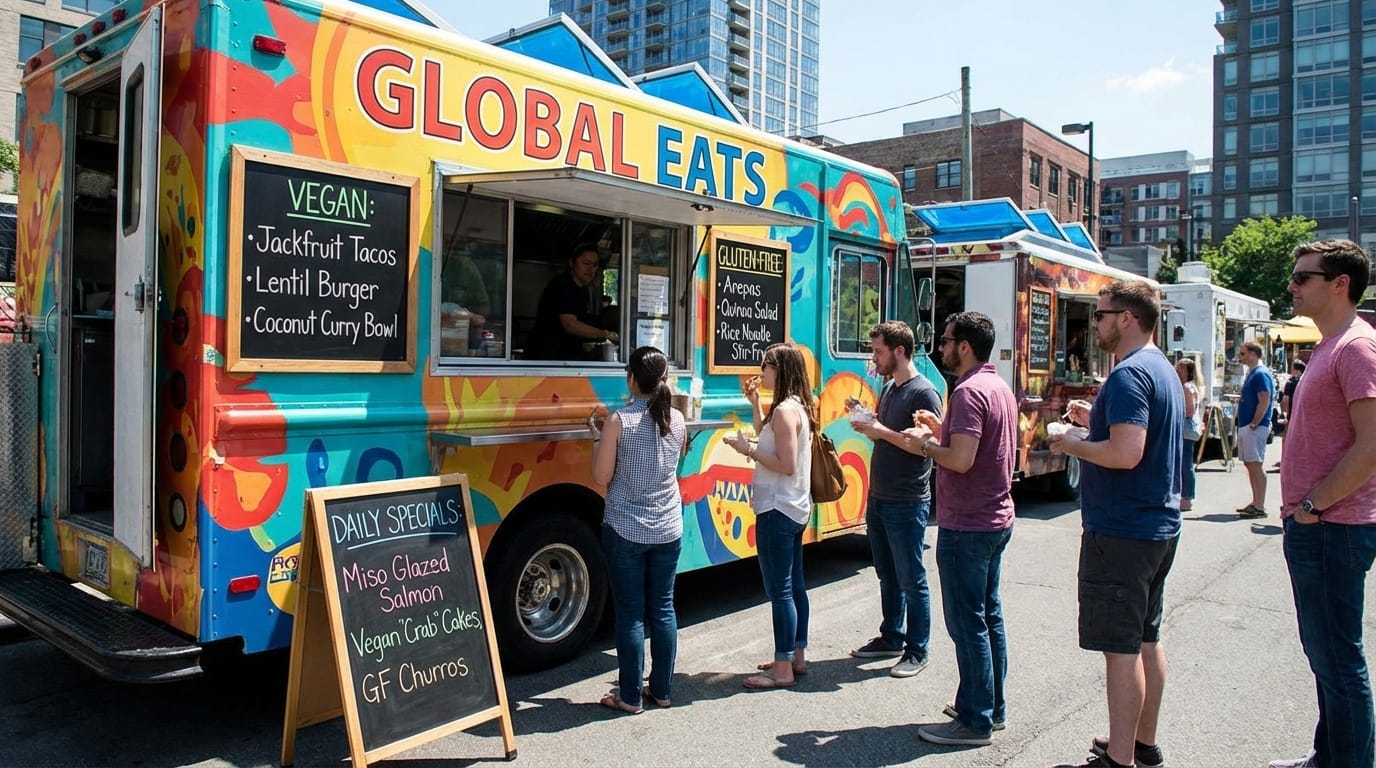
Menu Diversification: Specials, LTOs, and Dietary Options
How to add specials, limited-time offers, and dietary-friendly items to your menu without hurting margins or overwhelming your kitchen.
A focused menu keeps operations simple, but specials and dietary options can attract new customers and repeat visits. This guide covers when and how to add them. For pricing and margin basics, see our Menu Costing and Menu Engineering guides; for strategy, Menu Pricing Strategies.
Specials and Limited-Time Offers (LTOs)
Specials create urgency and give you a way to test new items or use seasonal ingredients. They can drive repeat visits and help you clear inventory or highlight high-margin items. Keep prep and ingredients aligned with what you already stock where possible so you don't add complexity; price every LTO to protect margin using your Menu Costing Tool. Promote on social and on the truck board so regulars know what’s new.
Step-by-Step: Planning, Pricing, and Promoting a Special
- Plan the item: use ingredients you already stock or that fit your prep flow; avoid one-off items that complicate ordering.
- Cost it: run the recipe through your Menu Costing Tool and set a price that keeps food cost and margin in line with your targets.
- Promote it: post on social, update the truck board or catering menu, and mention it at the point of sale so regulars know what's new.
- Track it: note sales and feedback; if it sells well and is operationally smooth, consider making it permanent.
Example: Weekly Specials Rotation
A simple way to keep specials manageable is to assign them by day or block. Examples:
- Mon–Tue: Soup of the day (rotate seasonal)
- Wed–Thu: Chef's special sandwich or bowl
- Fri–Sun: Weekend-only dessert or premium item
Dietary Options: Vegan, Gluten-Free, Allergen-Safe
Offering a few clearly labeled options (e.g. vegan, gluten-free) can broaden your audience and meet demand from events and health-conscious customers. Cross-contact is a real risk: shared surfaces, fryers, or utensils can introduce allergens or gluten. Use separate prep areas, pans, and utensils where feasible, and train staff on procedures. Don't over-promise; a small number of well-executed dietary items is better than a long list you can't deliver safely. For catering, dietary needs are often in the contract—see Catering Menu Pricing and Catering First 90 Days.
How many dietary items to add: start with one or two per category (e.g. one vegan main, one gluten-free option) that fit your concept and prep flow. Cost them like any other item and price to maintain margin. If they sell well and you can execute safely, you can add more over time.
Checklist: Before Introducing a New Special or Dietary Item
- List which dietary options you will offer (e.g. 1–2 vegan, 1–2 gluten-free) and stick to a small number you can execute safely.
- Define prep rules: separate surfaces, pans, and utensils where possible; train staff on cross-contact and labeling.
- Label clearly on the menu and at the counter; do not over-claim (e.g. 'gluten-friendly' if you cannot guarantee no cross-contact).
- For catering, capture dietary requirements in the contract and confirm with the client before the event.
Summary
Balance variety with operational simplicity. Cost every special and dietary add-on; keep items that support margin and reputation. Use specials to test ideas before making them permanent.